0 Chars
 Name Design
Want your name to look like it was written in a neon street sign in Tokyo or Bangkok? Type it above and the Asian text generator will rebuild each letter from look-alike characters taken from Japanese, Thai, Korean and other scripts.
The result still reads as English to most people, but with the sharp strokes and compact shapes that give Asian-inspired typography its unique look.
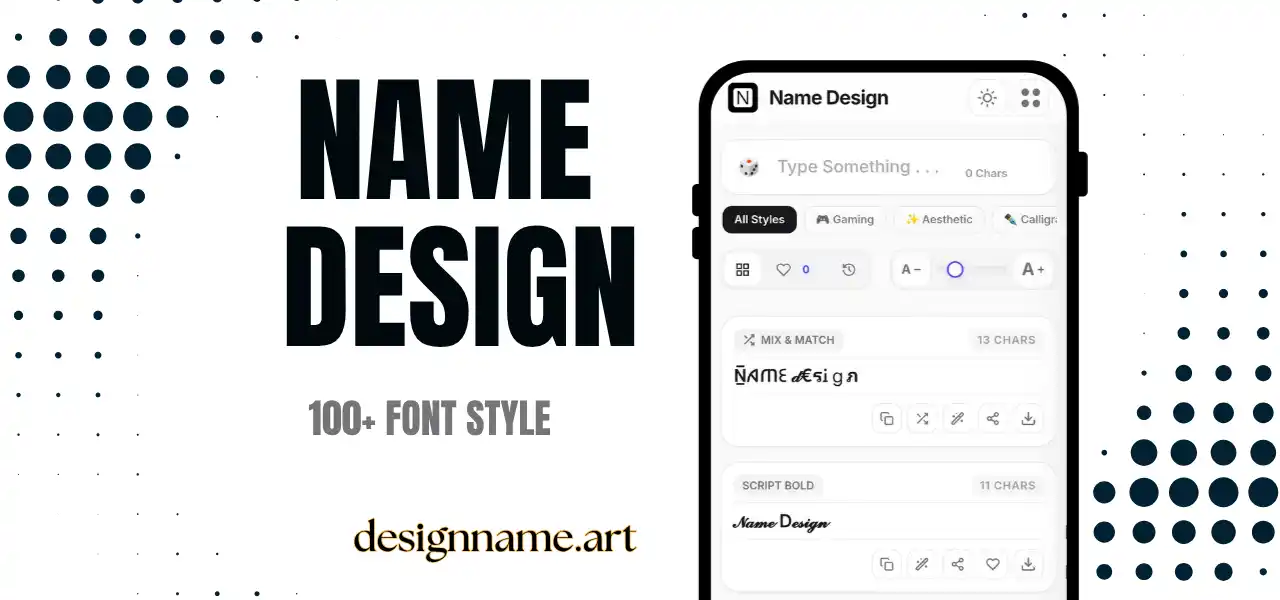
An Asian text generator is a tool that replaces Latin letters with characters from East and Southeast Asian writing systems that happen to resemble them. A rough "A" might become a katakana-like stroke, an "N" might turn into a three-line block, and an "E" might use a stacked character that looks like a comb.
Important note: this is a visual style, not a translation. The text does not become Japanese, Chinese or Thai, and it will not be pronounced that way. It simply borrows the shapes. That is why it is popular for usernames, gaming tags and bios that want an anime, street-style or cyber-city feeling.
It is part of our name design library, so you can compare it side by side with hundreds of other styles.
Behind the scenes, the generator uses Unicode, the universal standard that lets every device display characters from nearly every language. Unicode contains thousands of CJK ideographs, Japanese syllables, Thai consonants and Korean Hangul blocks.
Our mapping picks the closest visual match for each Latin letter, then joins them into a single line of plain text. Because it is text and not an image, you can copy it, paste it into a chat, and it travels with you.
Competitive players love sharp, high-contrast names. An Asian-inspired tag looks different from the default Latin lobby, which is useful in games that allow Unicode. Many titles limit characters, so keep it short and test it first.
Fan pages, Discord servers and cosplay accounts often use this style because it echoes the lettering seen in anime posters, game menus and opening titles.
A single line of Asian-style text above a plain-language bio is enough. It gives the profile personality without turning it into a puzzle.
Streamers can use a styled name as a text banner, and it also looks great in a thumbnail concept before a graphic designer builds the final artwork.
Short names work best. Three to eight letters usually give the cleanest, most readable result. Very long names create a dense strip of characters that may be hard to decode.
Pick names with simple shapes. Letters such as A, E, I, N, S, T and X have many close matches. Rounder letters such as B, G and Q can look unusual, so test the preview before you commit.
Pair the name with minimal decoration. A single bracket or dot is enough, because the characters are already visually dense.
Many of these characters belong to living writing systems used by millions of people. Using them as decoration is common and generally harmless, but it is worth being mindful. Avoid pairing styled text with religious or sacred symbols. Also avoid using the style to imitate a language you cannot speak when accuracy matters, such as in tattoos, official documents or business names. If you want a real translation, ask a native speaker.
Compared with cursive or bold styles, Asian-inspired text is more about silhouette than elegance. Cursive suggests handwriting, bold suggests emphasis, while block and syllabic characters suggest a graphic, almost architectural identity. This makes the style especially effective when your name is short and you want it to look like a logo.
If you like the idea but want something softer, try combining a small amount of Asian-style lettering with a gentle symbol such as a cherry blossom, star or wave. For a sharper gaming identity, add brackets or a cross between letters. You can always switch to our square and boxed styles when you want the same compact feeling with simpler, more widely supported characters.
Type your name in the box at the top of this page and watch the Asian-inspired previews update. Use the category pills to filter styles, tap the copy button on a card, then paste it into your profile or game. Use the heart to save favorites, and the download button to export any style as an image for banners, avatars or stream overlays.
Quick answers about the asian text generator.
No. It only replaces letters with look-alike characters, so the name stays English. For a true translation, use a language tool or ask a native speaker.
Yes, it is completely free. You can preview, copy and share every style with no account.
Some will and some will not, because each game filters characters differently. Test a short version before you commit.
Your device may be missing a font for that script. Try a different style or update your system fonts.
Yes. Both support Unicode in display names and bios, though usernames usually require standard characters.
It is common and generally fine, but avoid using them in places where accuracy or cultural respect matters, such as tattoos or official names.